Kitchen Backsplash Ideas: Zellige, Slab, or Hand-Cut Mosaic?
A kitchen backsplash is a relatively small surface with an outsized effect.
It catches the eye from across the room. It sits behind the busiest parts of the kitchen. It is exposed to steam, grease, water, sharp utensils, and the occasional tomato sauce incident.
Choose the material for the picture alone, and you may wish you had chosen differently five years from now.
The better approach is calm and simple: start with the countertop and cabinets. Then choose the surface that gives the whole room the right balance of texture, maintenance, pattern, and permanence.
For homeowners and interior designers in Colorado Springs and the Front Range, here is how the main options actually behave in a real kitchen.
Begin with the room, not the tile sample
Your countertop already has a visual language.
It may be quiet and pale. It may carry strong veining. It may be dark, warm, patterned, or almost architectural in its simplicity.
The cabinets add another layer: painted, stained, flat-front, Shaker, traditional, or somewhere more personal.
The backsplash should not compete with every surface at once. It should complete the composition.
A strongly veined counter often benefits from a quieter backsplash. Simple cabinetry can carry more texture, color, or pattern. A hand-cut mosaic may be the right choice behind the range, while a calmer field tile continues around the rest of the kitchen.
The goal is not to make every surface perform.
The goal is to make the room feel considered.
Zellige: character with a few opinions
Zellige and zellige-style tile bring surface variation that manufactured tile cannot fully imitate.
Edges are irregular. Faces shift in tone and gloss. Light moves across the wall instead of stopping at a perfectly uniform grid.
That variation is the appeal.
It is also the practical reality. Handmade tile asks for a patient installer who understands how to manage inconsistent thickness, spacing, alignment, and transitions. The finished wall should feel naturally varied, not accidentally uneven.
Zellige can work beautifully in a kitchen with:
- Warm wood cabinetry
- Simple stone countertops
- A relaxed, collected interior
- A willingness to live with subtle variation
- A preference for material character over perfect uniformity
Behind the range, think carefully about texture and maintenance. A deeply irregular surface can catch more grease than a smooth slab or porcelain tile. Proper grout, sealing where appropriate, and thoughtful placement matter.
Zellige is not careless design. It is controlled imperfection.
Ceramic and porcelain: the dependable field
Ceramic and porcelain tile give you the broadest range of sizes, colors, finishes, and patterns.
A simple rectangular field tile can create a quiet backdrop. A larger porcelain tile can reduce grout lines. A shaped tile can add rhythm without becoming a full mosaic. A tile that resembles handmade work can provide texture with more consistency.
This is often the right direction when you want:
- A clean, adaptable backsplash
- Less visual noise
- A material that is straightforward to maintain
- A defined pattern without a custom art element
- A practical surface around the sink and cooktop
Large-format porcelain can be especially effective in a modern kitchen. Fewer joints create a calmer field and make wipe-downs easier. The installation still needs precision. Large tile does not hide poor layout. It makes the layout more obvious.
Slab and the full-height countersplash
A slab backsplash extends the countertop material, or a complementary slab, up the wall. It may stop at the underside of the cabinets or continue all the way to the ceiling.
The effect is quiet and substantial.
There are fewer grout lines. Cleaning behind the range is simpler. The backsplash reads as one continuous plane rather than a collection of individual pieces.
A full-height slab is a strong choice when you want:
- Minimal visual interruption
- A fast, smooth surface to wipe clean
- The countertop and backsplash to feel connected
- A modern, tailored finish
- Less grout maintenance
It also changes the installation completely.
A slab requires careful measuring, templating, fabrication, transport, and precise cutouts for outlets, windows, and other interruptions. There is less room to adjust on site than there is with small tile.
The surface is simple. The process is not.
Mosaic versus field tile
A field tile gives you calm.
It generally has fewer grout lines, a more repeatable rhythm, and a surface that lets the cabinets, countertop, or architecture lead.
A mosaic gives you detail.
Small pieces can build pattern, movement, landscape, color, and personal meaning. A custom mosaic backsplash can turn the kitchen into a room with a point of view rather than a room assembled from standard selections.
Neither approach is automatically better.
Choose field tile when you want the backsplash to recede slightly. Choose mosaic when the wall deserves to become the kitchen’s center of gravity.
A hand-cut mosaic is more labor than a simple field tile installation. Each piece has to be considered. Curves, color transitions, corners, outlets, and borders all require planning.
That is the cost of making something one-of-a-kind. It is also why the result can feel less like a finish and more like a collected work of art.
The real variable is workmanship
Tile selection matters. Installation determines whether the selection looks intentional.
Good kitchen backsplash installation considers the full wall before the first piece is set.
That includes:
Grout line width
Narrow joints can create a quiet surface. Wider or contrasting joints can emphasize the pattern.Layout and cuts
Cuts should land in sensible places, not become accidental focal points beside a cabinet or range.Outlets and switch plates
Electrical boxes need to be planned into the pattern. A mosaic motif should not be interrupted carelessly.Corners and windows
The design should wrap with purpose. Corners are not where the layout goes to hide.Edges and transitions
The end of the backsplash needs a clean finish, especially where tile meets painted wall, cabinetry, or a doorway.Counter thickness
The backsplash should relate to the countertop edge and thickness. Small mismatches can make an otherwise beautiful installation feel unsettled.
Mesh-mounted mosaic sheets require particular attention. If the sheets are installed without managing their spacing and layout, the mesh can create visible grids or repeated seams. The eye notices. Usually before the installer does.
At The Glass Lion, Simon Beames brings 26 years in the trade to both the artistic and structural sides of the work. The hand-cut pieces matter. So do the lines around them.
What belongs behind the range?
The area behind the cooktop is the least forgiving part of the kitchen.
It sees the most grease, steam, heat, and cleaning. Smooth stone, glass, porcelain, and other non-porous or well-sealed surfaces are generally easier to wipe than porous materials or mosaics with deep recesses.
That does not rule out a custom mosaic.
It means the mosaic should be designed with the room’s actual use in mind. You may choose a smooth glass mosaic, a simpler border, a slab field with a mosaic inset, or a more detailed piece in a zone that is less exposed to heavy cooking.
Beauty should survive contact with dinner.
Grout is part of the design
Grout can make a mosaic read as one flowing image or make every individual piece speak clearly.
A closely matched grout tends to quiet the joints and let the overall field appear more seamless. A contrasting grout emphasizes the pattern, shape, and placement of each tile.
For narrow mosaic joints, unsanded grout is often the appropriate direction, but the final choice depends on the material, joint width, and installation conditions. The installer should confirm the product and application rather than treating every mosaic the same way.
Behind the range, stain resistance and cleanability deserve extra attention. A grout decision is not merely decorative. It affects how the backsplash behaves every day.
Fishtail Mountain, Manitou Springs
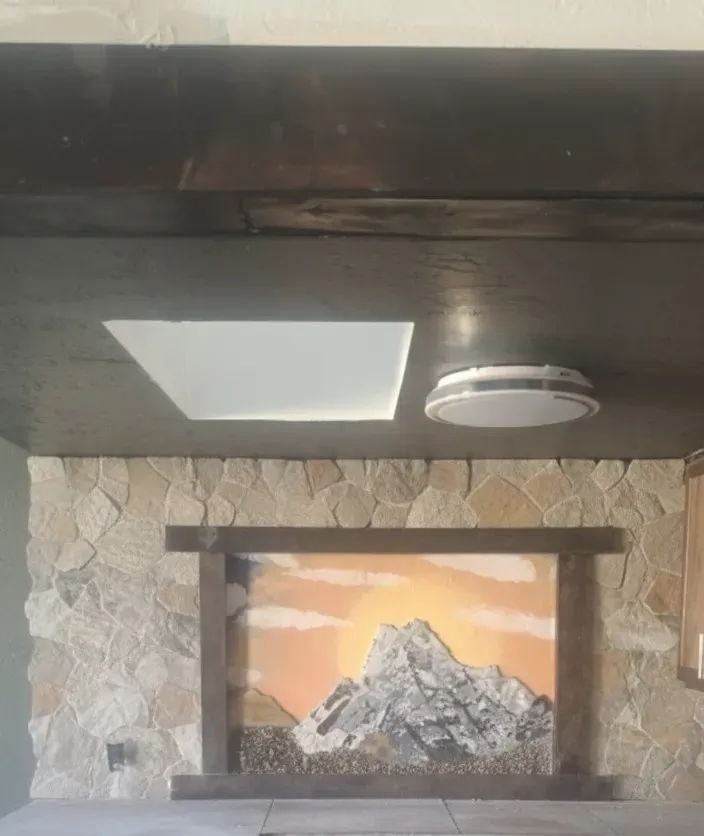
Fishtail Mountain / kitchen centerpiece
This custom mountain mosaic was made for the kitchen’s center of gravity and set in stone.
The landscape is hand-cut and hand-placed. It brings Colorado into the room without turning the kitchen into a theme set. The stone, glass, pattern, and surrounding surfaces give the piece room to hold attention.
This is what a custom mosaic backsplash can do when it is designed as part of the architecture.
The same thinking can carry through the rest of a home. A kitchen mosaic can relate to a shower mosaic, fireplace surround, entryway detail, or another carefully chosen feature. The connection does not need to be literal. Repeated color, stone, line, or mood is often enough.
A house should feel composed, not assembled from unrelated samples.
What drives backsplash installation cost?
There is no honest single price for a backsplash without seeing the kitchen and understanding the design.
The main factors are:
- Total surface area
- Material selection
- A standard four-inch splash versus a full-height backsplash
- Tile size and the amount of cutting
- Outlets, windows, corners, and layout adjustments
- Surface preparation
- Whether the design includes a custom mosaic element
A hand-cut mosaic requires more labor than a simple field tile job. It is a one-time cost on a surface you will look at every day.
The right question is not only what the backsplash costs to install. It is what you want the wall to do for the room, and how long you want to live with that decision.
Frequently asked questions
How high should a backsplash go?
There is no universal height. A backsplash may rise a few inches above the countertop, continue to the underside of upper cabinets, extend behind open shelving, or run full-height to the ceiling.
The right height depends on the cabinet layout, countertop, range, windows, and the visual importance of the wall.
Do I need to remove the old backsplash first?
Usually, the existing backsplash should be removed when it is damaged, poorly bonded, uneven, or interfering with the new layout. Removal also allows the wall to be inspected and prepared properly.
In some cases, tile may be installed over a suitable existing surface. That decision should be made after assessing the condition of the wall.
Can I tile over existing tile?
Sometimes. The existing tile must be sound, clean, stable, and suitable for receiving the new installation. Adding another layer can also affect outlet depth, countertop transitions, and cabinet clearances.
A proper assessment comes first. Tile over tile is not a shortcut if it creates new problems.
Sanded or unsanded grout for narrow mosaic joints?
Unsanded grout is often used for narrow joints because it can move into tight spaces and is less likely to scratch delicate tile surfaces. The material and joint width still matter.
Your installer should select grout based on the actual mosaic, not a generic rule.
What tile is best behind the range?
Smooth, durable, easy-to-clean materials are usually the most practical behind the range. Glass, porcelain, and suitable stone can all work when properly installed and maintained.
A textured or porous material can still be used, but it may require more cleaning and sealing.
Does a dark backsplash make a kitchen feel smaller?
It can, especially in a small or poorly lit room. But dark tile or glass can also add depth and frame the kitchen beautifully when balanced with lighter cabinets, reflective surfaces, and deliberate lighting.
The finish matters as much as the color.
How long does a kitchen backsplash installation take?
The schedule depends on the surface area, preparation, tile type, amount of cutting, custom mosaic work, and whether materials need to be fabricated or ordered.
A simple field tile installation is different from a full-height slab or hand-cut mosaic. The schedule should be confirmed after the project is reviewed.
Start with the surface. Build from there.
The best kitchen backsplash ideas are not chosen in isolation.
They respond to the counter. They respect the cabinets. They account for cooking, cleaning, outlets, corners, and light. They use beauty without ignoring structure.
At The Glass Lion, Simon Beames combines custom tile design with the discipline of professional tile installation. The work is hand-cut, hand-placed, and built with the same no-shortcuts standard carried through every project.
Explore our work, learn more about tile and mosaic services, or start a conversation about your kitchen in Colorado Springs or the Front Range.
For a free consultation, call Simon directly at 719-521-8312.